
Buying a new smartphone can cost over a thousand dollars. That’s why millions of people are turning to refurbished phones as a more affordable alternative. But what is a refurbished phone, exactly? And can you actually trust one to work reliably?
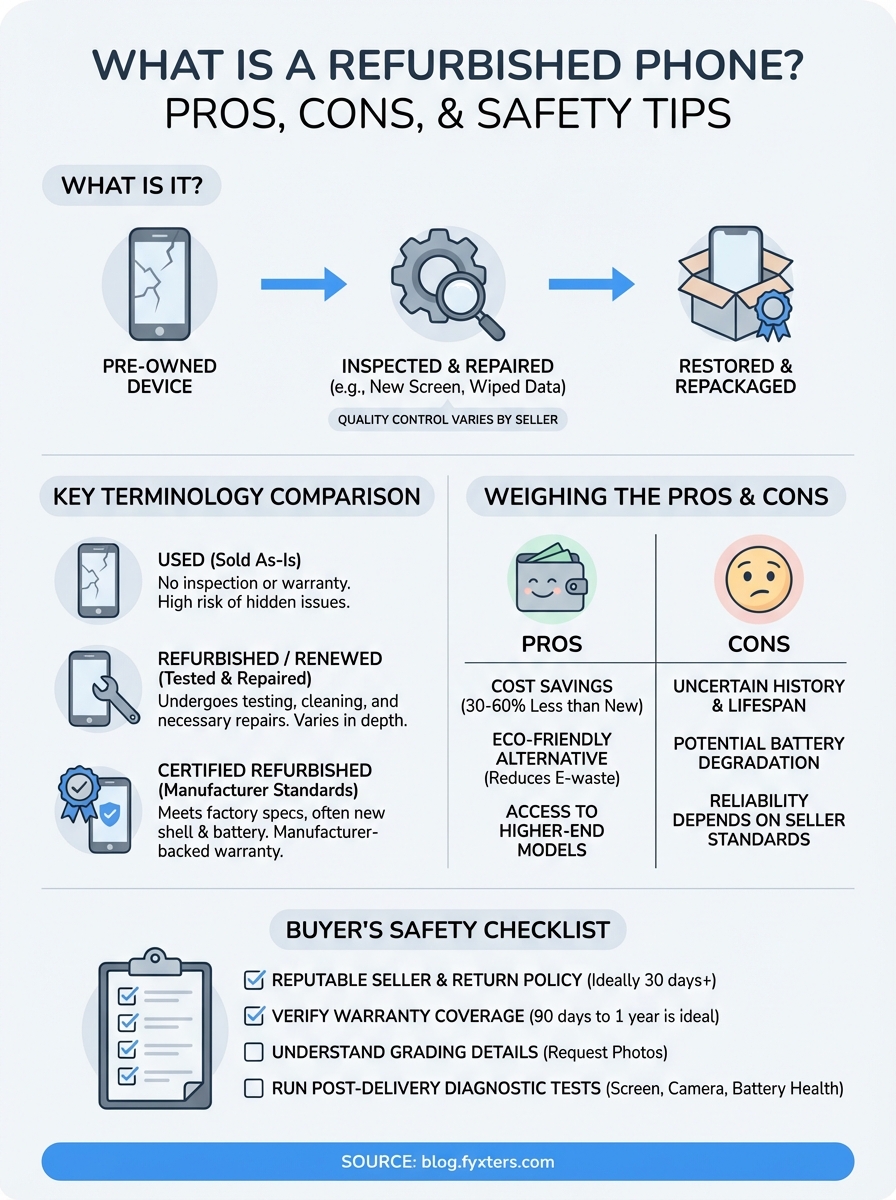
A refurbished phone is a pre-owned device that has been inspected, repaired if needed, and restored to working condition before being resold. Unlike a "used" phone sold as-is, refurbished devices go through a quality control process, though the thoroughness varies widely depending on the seller.
At fyxters, we connect Canadians with vetted repair technicians who restore phones to peak performance every day. We’ve seen firsthand how proper repairs and quality parts make the difference between a device that lasts years and one that fails within months. This guide covers everything you need to know: what refurbished phones actually are, how grading systems work, the pros and cons of buying one, and how to make a safe purchase.
Understand what "refurbished phone" really means
A refurbished phone is a previously owned or returned device that has been brought back to working condition through testing, repairs, and cleaning. The device might come from someone who upgraded to a newer model, returned it within the store’s return window, or traded it in for credit. What matters is that before resale, the phone goes through some level of inspection and restoration.
The refurbishment process step by step
When you ask what is a refurbished phone, you’re really asking what happens between the previous owner and you. Most refurbishers follow a standard workflow: they receive the device, run diagnostic tests on the screen, battery, buttons, cameras, and connectivity features, then replace any failing components. After repairs, they wipe all personal data, clean the exterior, and repackage the phone.
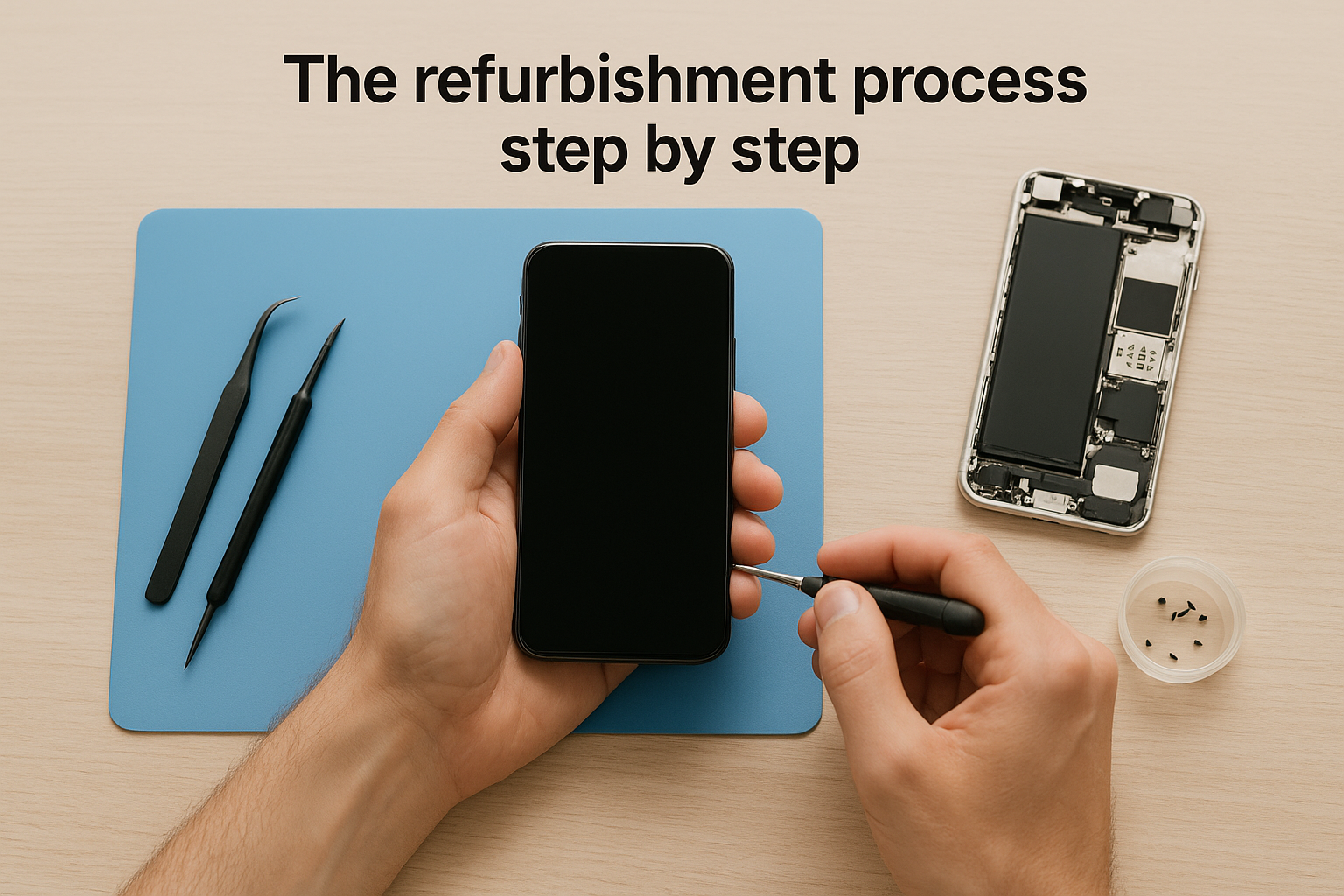
Quality refurbishment means replacing faulty parts with reliable components, not just masking problems with cosmetic fixes.
The depth of this process varies significantly. Professional refurbishers test dozens of functions and use specialised equipment to verify battery health, waterproofing (if original), and sensor accuracy. Budget operations might only check if the phone turns on and responds to touch. You won’t always know which approach was used unless the seller provides detailed documentation.
Quality varies based on who refurbishes the device
Manufacturer refurbishment programmes typically deliver the highest quality because the original maker has access to genuine parts, factory training, and complete repair documentation. Apple, Samsung, and Google run their own certified programmes where devices receive new batteries, new outer shells, and the same warranty as new phones.
Third-party refurbishers range from reputable repair networks to individual resellers working from home. Large-scale operations often match manufacturer standards, whilst smaller sellers may cut corners to maximise profit. Before buying, check whether the refurbisher provides a warranty, return policy, and grading details. These signals tell you how confident they are in their work.
Compare refurbished vs used vs renewed vs certified
The smartphone resale market uses confusing terminology that often means different things depending on the seller. When you’re researching what is a refurbished phone, you’ll encounter "used," "renewed," and "certified" labels that seem interchangeable but carry distinct implications for quality and reliability.
Used phones have no inspection
A used phone is sold as-is with no repairs, testing, or warranty. The seller lists the device in whatever condition it’s in, and you bear all the risk of hidden problems like degraded batteries, faulty cameras, or water damage. Private sales through classified ads or auction sites typically fall into this category, where you’re buying directly from the previous owner with no quality control.
Used phones offer the lowest prices but come with the highest risk of unexpected failures.
Renewed and certified are marketing terms for refurbishment
"Renewed" is Amazon’s branding for refurbished products sold through their platform, whilst "certified" usually means a manufacturer or authorised partner performed the refurbishment. Both terms describe devices that have been tested, repaired, and restored to working condition. The key difference lies in who did the work and what standards they followed. Certified refurbished phones from Apple or Samsung meet factory specifications, whilst third-party renewed devices may use aftermarket parts and follow less rigorous testing protocols.
Weigh the pros and cons for your situation
Understanding what is a refurbished phone means recognising both the financial benefits and potential drawbacks. Your decision should depend on your budget constraints, risk tolerance, and how long you need the device to last reliably.
Cost savings with calculated risks
Refurbished phones typically cost 30% to 60% less than new models, freeing up hundreds of dollars for other priorities. You can often afford a higher-end model from last year instead of settling for a budget new phone. Many refurbished devices still have months or years of software updates remaining, giving you a modern experience without the premium price.
The trade-off is uncertainty about the device’s history and remaining lifespan. You don’t know whether the previous owner dropped it repeatedly or whether internal components like the logic board have hidden stress fractures. Batteries in refurbished phones may already have hundreds of charge cycles logged, even after replacement, shortening your ownership period.
Refurbished phones deliver the best value when you buy from sellers who provide transparent grading, warranties, and return windows.
Reliability depends on seller standards
Manufacturer-refurbished and certified devices offer peace of mind through rigorous testing and genuine parts, though they cost more than third-party options. Budget refurbishers might skip expensive repairs, leaving you with a phone that works today but fails within months. Check whether the seller backs their work with at least a 90-day warranty and accepts returns if the device arrives with defects.
Use a safety checklist before you buy
Knowing what is a refurbished phone isn’t enough to protect you from poor-quality devices or misleading sellers. You need to verify specific details before handing over your money, regardless of how attractive the price looks. Smart buyers treat refurbished phone purchases like mini investigations, checking credentials and policies that separate legitimate refurbishers from those cutting corners.
Check the seller’s reputation and return policy
Start by researching the seller’s track record through customer reviews on independent platforms, not just their own website. Look for patterns in complaints about devices failing quickly, missing accessories, or poor customer service when problems arise. Reputable sellers clearly state their return window (ideally 30 days minimum) and offer hassle-free returns if the phone arrives with defects or doesn’t match the advertised condition.
Always choose sellers who stand behind their refurbishment work with transparent return policies and responsive support.
Verify warranty coverage and grading details
Confirm the warranty length and what it actually covers before completing your purchase. A 90-day to one-year warranty indicates the seller trusts their refurbishment quality, whilst 30 days or less suggests they expect issues. Ask whether the warranty covers parts and labour or just specific components. Additionally, understand the seller’s grading system (Grade A, B, C) and request photos showing the actual cosmetic condition, since grading standards vary widely across refurbishers.
Test your phone after delivery and plan for fixes
Receiving your refurbished phone marks the start of your evaluation period, not the end of your research. You need to immediately check whether the device matches the advertised condition and performs reliably under daily use. Most problems surface within the first few days, giving you time to request a return or replacement whilst the seller’s return window remains open.
Run diagnostic tests within the return window
Start testing as soon as you unbox the device, checking the screen for dead pixels, scratches, or unresponsive areas by opening a white background image and swiping across every section. Test all physical buttons, cameras (front and back), speakers, microphone quality during calls, and Face ID or fingerprint sensors. Check battery health in your phone’s settings to confirm it holds at least 80% capacity if the seller claims it was replaced. Make test calls, send messages, connect to Wi-Fi and mobile data, and ensure GPS accurately tracks your location.
Your return window is your safety net, so test every function before it expires.
Know where to get repairs if something fails
Understanding what is a refurbished phone means accepting that repairs might be necessary sooner than with new devices. If issues emerge after the return period, warranty coverage becomes your primary protection, though you’ll need a reliable repair provider. fyxters connects you with vetted local technicians across Canada who provide transparent pricing, fast service, and repair guarantees, ensuring your investment stays protected even if the refurbisher’s support falls short.
Key takeaways and next steps
Now that you know what is a refurbished phone and how to buy one safely, you can make an informed decision that balances cost savings with reliability concerns. Refurbished devices offer legitimate value when you purchase from sellers who provide transparent grading, solid warranties, and responsive customer support. The key is doing your research upfront and testing thoroughly during your return window.
Document any issues immediately and never assume small problems will resolve themselves. Keep all purchase receipts, warranty documentation, and correspondence with sellers in case you need to escalate a claim or request repairs later.
If your refurbished phone needs repairs or you’re experiencing problems with an existing device, professional help ensures your investment stays protected. Whether you need a screen replacement, battery service, or diagnostic testing, vetted iPhone repair technicians in Montreal provide transparent pricing and guaranteed repairs that keep your phone working reliably.