
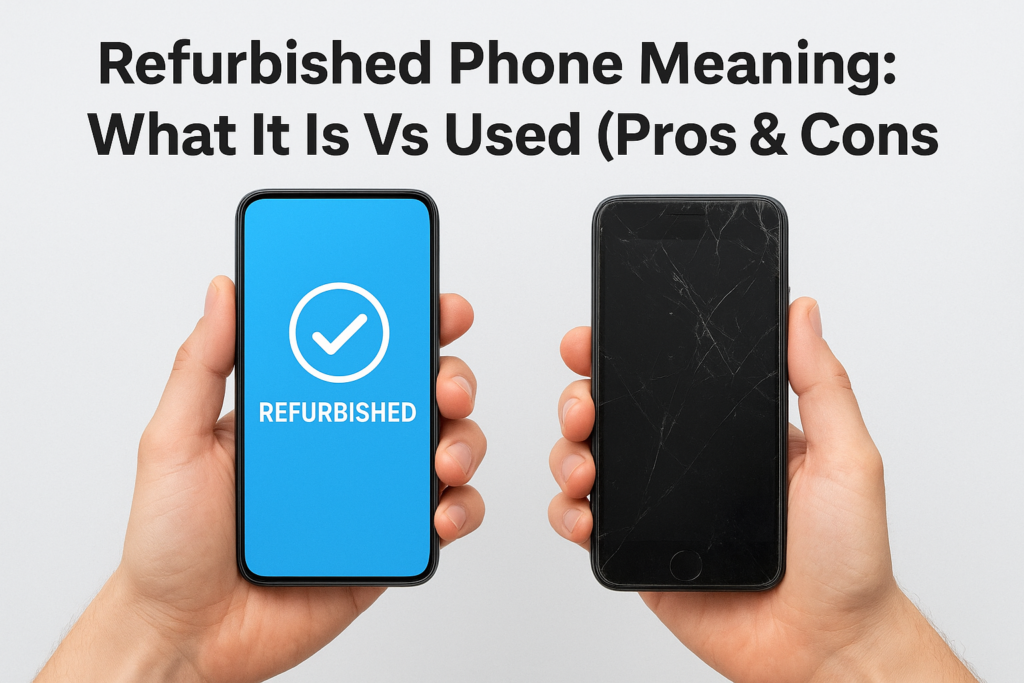
Shopping for a phone on a budget often leads to one question: what does "refurbished" actually mean? The refurbished phone meaning gets confused with "used" all the time, but they’re not the same thing. A refurbished device has been inspected, repaired, and restored to working condition before resale, unlike a used phone sold as-is.
Before you spend money on a refurbished device, you need to understand exactly what you’re getting. This article breaks down the difference between refurbished and used phones, walks you through the refurbishment process, and weighs the pros and cons so you can make a confident decision.
At Fyxters, we connect Canadians with vetted phone repair technicians every day, so we understand what separates a quality-repaired device from a questionable one. Whether you’re considering a refurbished purchase or wondering if fixing your current phone makes more sense, this guide will help you weigh your options.
What refurbished means and what it does not
Understanding the refurbished phone meaning starts with knowing what happens before a device reaches your hands. A refurbished phone is a previously owned or returned device that a seller or manufacturer has tested, repaired if necessary, and certified as functional. This process separates refurbished phones from simple used devices that get resold without inspection.
What refurbished actually includes
Refurbishment covers specific repairs and quality checks that bring a phone back to working condition. The process typically includes replacing broken parts like cracked screens, worn-out batteries, or faulty charging ports. Technicians run diagnostic tests on the camera, speakers, buttons, and wireless connectivity to catch hidden problems.
Most refurbished phones also get cosmetic attention. Sellers clean the device, polish scratches where possible, and sometimes replace the outer casing. You’ll often receive the phone in new packaging with compatible accessories like a charging cable, though these may not be original equipment.
Refurbishment transforms a problematic device into one that meets specific performance standards, unlike a used phone sold in whatever state it’s in.
What refurbished does NOT guarantee
The term "refurbished" doesn’t mean you’re getting a like-new device in every aspect. Light scratches, minor dents, or signs of previous use often remain, especially on budget refurbished models. The cosmetic grade (excellent, good, fair) tells you how much visible wear to expect.
Refurbishment also doesn’t guarantee original parts were used for repairs. Some sellers use aftermarket screens, batteries, or cameras that work fine but may not match the original manufacturer’s quality. Battery health varies too, since not every refurbisher replaces the battery unless it fails testing.
Your warranty coverage depends entirely on who refurbished the phone. Manufacturer refurbished devices typically include better warranties than third-party sellers, and some budget refurbishers offer minimal or no warranty protection at all.
Why the term matters when you buy a phone
The refurbished phone meaning directly impacts what you receive, how much warranty protection you get, and whether you’re actually saving money. Many sellers use "refurbished" loosely to make a used device sound more appealing, which leaves you assuming the phone went through proper repairs when it might not have.
What you risk by ignoring the difference
Buying without understanding what "refurbished" means can cost you more than just money. You might receive a phone with hidden problems like a dying battery or a screen that stops responding after a few weeks. Some sellers mark devices as "refurbished" when they’ve only cleaned the exterior and done no actual repairs or testing.
Without knowing what refurbishment should include, you can’t spot when a seller is cutting corners or misrepresenting the device condition.
How it shapes your buying decision
Understanding refurbishment helps you ask the right questions before buying. You’ll know to check whether the battery was replaced, what warranty comes included, and whether the seller used original or aftermarket parts. This knowledge lets you compare offers properly instead of choosing based solely on price.
Your decision between refurbished and new also depends on what refurbished actually delivers. If a device went through manufacturer refurbishment with genuine parts and a solid warranty, it offers real value. If it’s a third-party refurb with minimal testing, you’re better off saving for a new phone or considering a professional repair of your current device instead.
How a phone gets refurbished step by step
Understanding the refurbishment process shows you exactly what separates a properly restored phone from one that simply got wiped and resold. The process follows specific stages designed to identify problems, fix them, and verify the device works reliably before it reaches you.
Initial inspection and testing
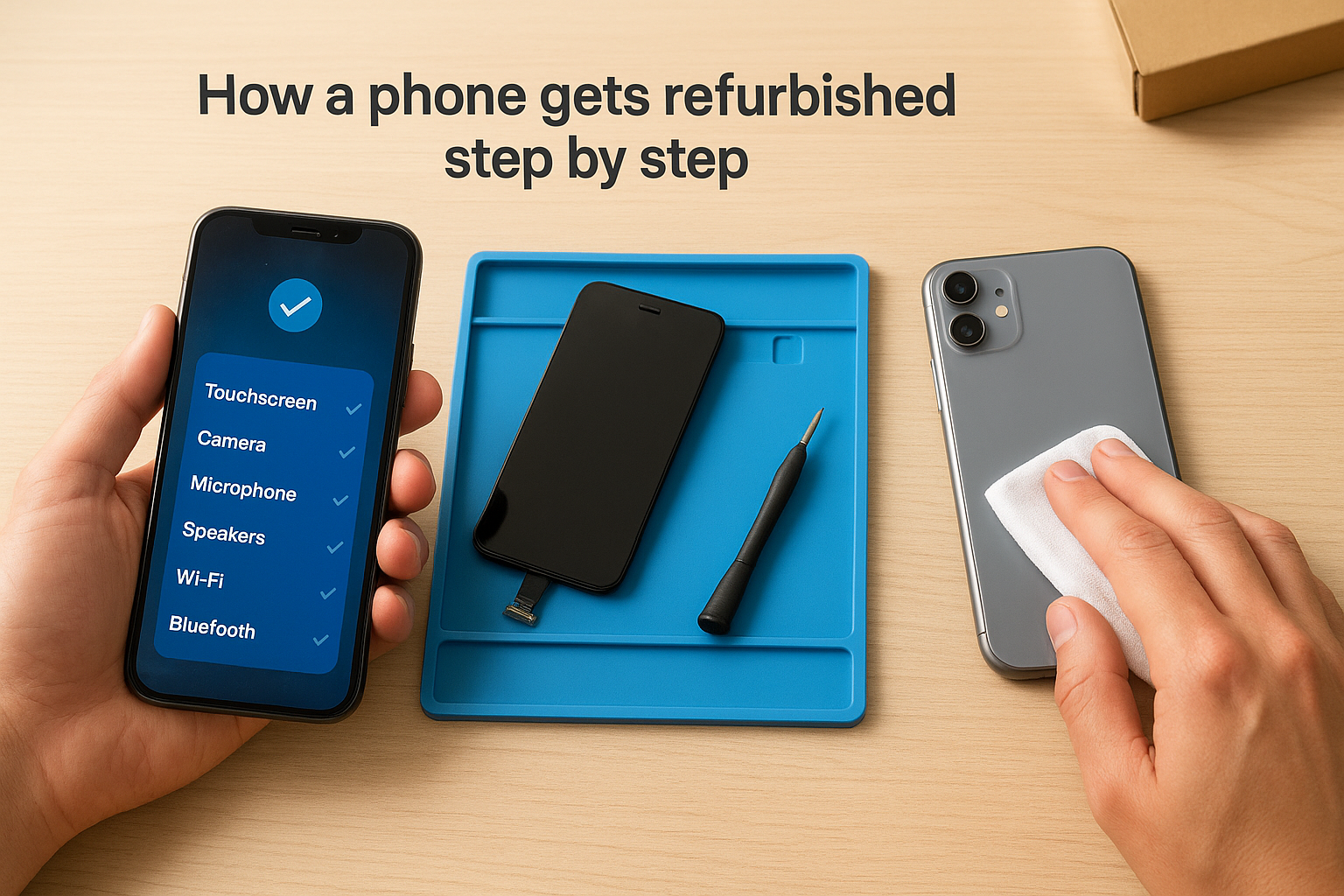
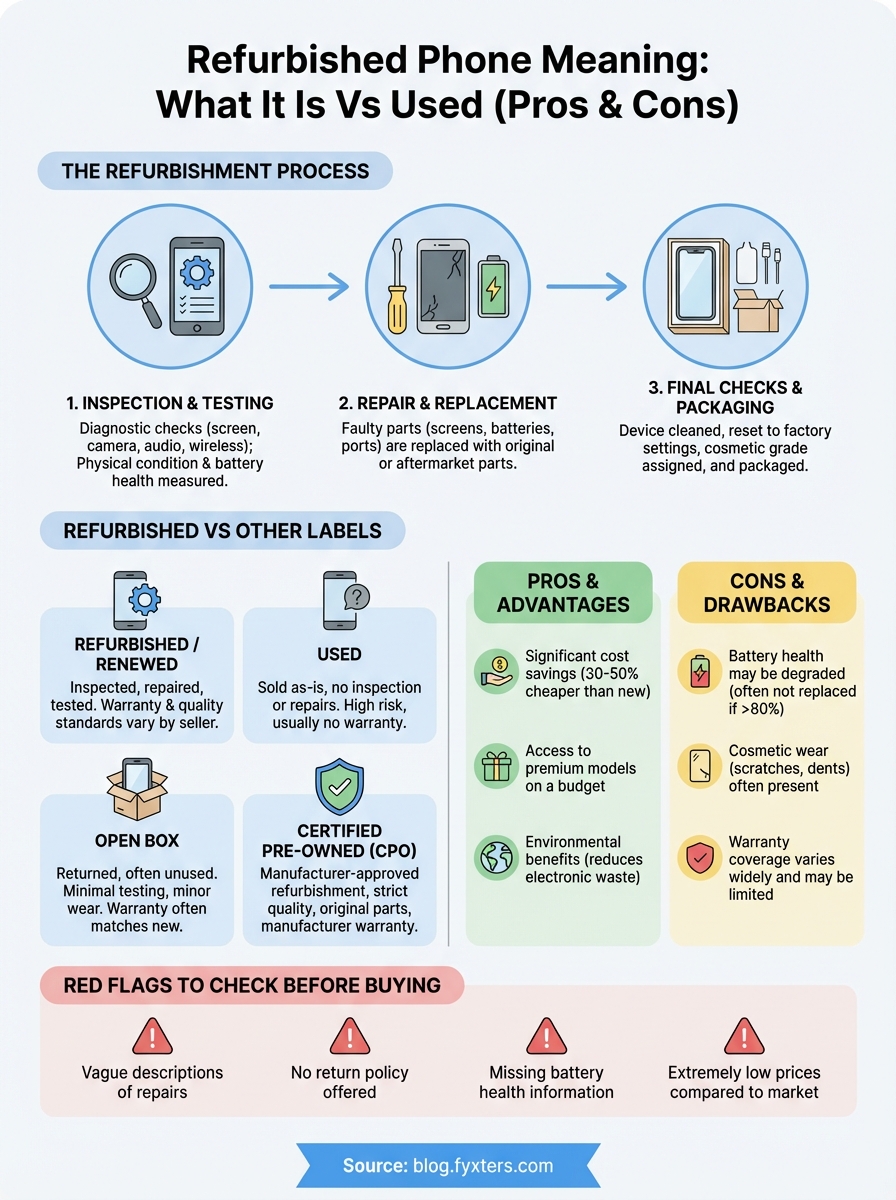
Refurbishers start by running diagnostic software that checks every major component. Technicians test the touchscreen response, camera functionality, microphone, speakers, and wireless features like Wi-Fi and Bluetooth. They also examine the physical condition for cracks, water damage indicators, and worn-out parts.
Battery health gets measured to determine if it holds enough charge to meet the refurbisher’s standards. Most professional refurbishers set a minimum battery capacity (often 80% of original) that the device must maintain.
Repair and part replacement
After identifying issues, technicians replace failing components like cracked screens, depleted batteries, or broken charging ports. Some refurbishers use original manufacturer parts, while others install aftermarket alternatives that meet quality standards but cost less.
The parts used during this stage directly impact how well your refurbished phone performs and how long it lasts.
Final quality checks and packaging
Once repairs finish, the phone goes through final testing to confirm everything works properly. Refurbishers reset the device to factory settings, removing all previous owner data. They clean the exterior, package the phone with compatible accessories, and grade its cosmetic condition based on visible wear.
Refurbished vs used, open box, renewed and CPO
The marketplace uses several labels for non-new phones, and each term carries different implications for what you receive. Understanding these distinctions helps you avoid paying refurbished prices for a device that only got basic cleaning, or expecting warranty coverage that doesn’t exist.
Used phones
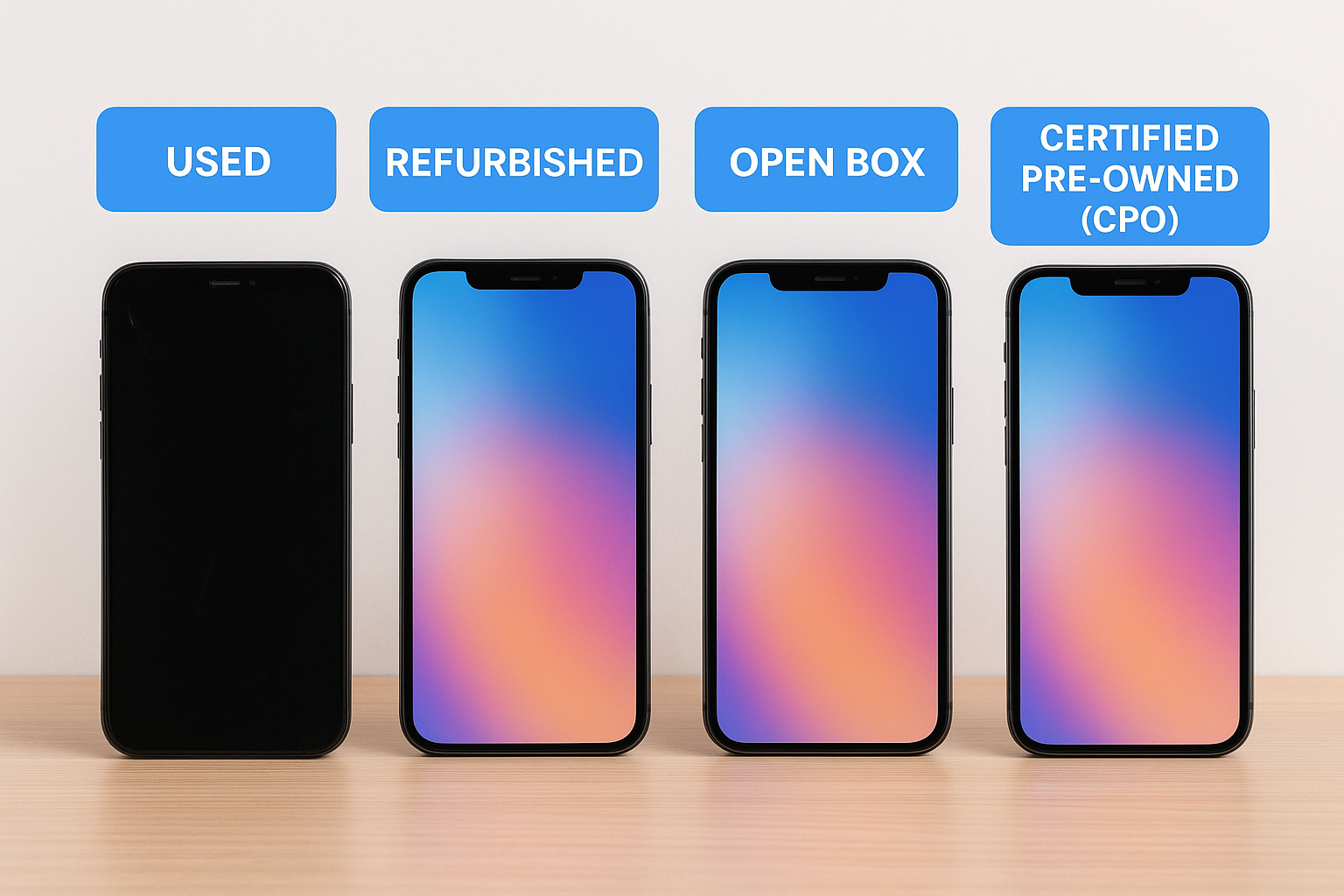
A used phone means someone owned it before you, and the seller lists it without any inspection or repairs. You receive the device in whatever condition it happens to be in, with no guarantee that everything works properly. Most used phone sales offer no warranty, leaving you responsible if the battery dies or the screen stops responding a week after purchase.
Refurbished and renewed
"Renewed" typically serves as Amazon’s branding for their refurbished programme, but the refurbished phone meaning remains the same. Both terms indicate the device went through inspection, repairs, and testing before resale. The specific quality standards and warranty terms vary by seller, so you need to check what each refurbisher actually includes.
The label matters less than understanding exactly what inspection, repairs, and warranty protection come with your purchase.
Open box
Open box devices are returns that never got used or only briefly activated before the customer returned them. These phones receive minimal testing compared to refurbished models and may show slight cosmetic wear from handling. Warranty coverage often matches new phones since they’re technically unused.
Certified pre-owned (CPO)
CPO phones go through manufacturer-approved refurbishment with strict quality standards and original replacement parts. You typically receive a manufacturer-backed warranty similar to new devices, making CPO the most reliable category after buying new.
Pros, cons, and red flags to check before buying
Weighing the refurbished phone meaning against actual value requires understanding both benefits and risks before you commit to a purchase. Refurbished devices offer real savings when you buy from reliable sellers, but they also carry potential problems that new phones don’t have.
The main advantages you gain
Refurbished phones cost significantly less than new models, often saving you 30-50% while still providing full functionality. You get access to premium models you couldn’t otherwise afford, and manufacturer-refurbished devices frequently include warranties that protect your investment. Environmental benefits matter too, since buying refurbished reduces electronic waste.
The drawbacks worth considering
Battery degradation remains the biggest concern, since many refurbished phones keep original batteries that have lost capacity over time. Cosmetic wear like scratches or dents appears on most refurbished devices, and warranty coverage varies wildly depending on who refurbished the phone. Some refurbishers use aftermarket parts that work initially but fail sooner than original components.
A cheap refurbished phone without warranty protection often costs more in the long run when repairs become necessary.
Red flags that signal problems
Avoid sellers who provide vague descriptions about what refurbishment included or offer no return policy. Missing information about battery health percentage suggests the seller skipped proper testing. Extremely low prices compared to other refurbished listings often mean the device received minimal inspection, and sellers who refuse to specify whether they used original or aftermarket parts are hiding quality compromises.
What to do next if you need a working phone
Understanding the refurbished phone meaning helps you make smarter buying decisions, but purchasing refurbished isn’t always your best option. If your current phone has a specific problem like a cracked screen, dead battery, or broken charging port, professional repair often costs less than buying even a refurbished replacement.
Compare the repair cost against refurbished prices before deciding. A screen replacement or battery swap typically runs much lower than purchasing another device, and you keep your existing data, photos, and settings without migration hassles. Repair also eliminates the uncertainty around battery health and unknown repair history that comes with refurbished phones.
Montreal residents needing fast iPhone screen repair can book vetted technicians through iPhone screen repair Montreal, getting transparent pricing and same-day service. You receive a quality guarantee on every repair, avoiding the warranty gaps that plague budget refurbished devices.